Waking up to mountain silhouettes and twinkling city lights is hard to beat. If you’re drawn to Broadmoor Bluffs for exactly that, you’re not alone. This foothills pocket in southwest Colorado Springs offers larger lots, custom homes, and the quiet, scenic lifestyle many buyers want. In this guide, you’ll learn what to weigh before you fall for the view, including slopes and stability, wildfire readiness, insurance, HOAs, and a smart due‑diligence plan. Let’s dive in.
Why Broadmoor Bluffs appeals
Broadmoor Bluffs sits on the lower slopes of Cheyenne Mountain, where many homes are perched to capture sweeping mountain and city‑light views. Lots often slope, so designs favor decks, walk‑out lower levels, and terraced outdoor areas to make the most of the setting. You’ll find primarily single‑family, custom or semi‑custom homes, many from the 1980s through the 2000s.
You’re close to iconic local attractions, trailheads, and open space, with everyday access to the Broadmoor area’s dining and recreation. The neighborhood is served by Cheyenne Mountain School District 12. View homes here typically trade at a premium compared with broader city medians, reflecting both the setting and lot sizes.
The tradeoffs to plan for
Buying for a view in the foothills means balancing benefits with practical costs. You may see higher upfront pricing, plus recurring budget items tied to sloped‑lot maintenance and wildfire mitigation. Insurance premiums can also be higher due to wildfire and hail exposure. With the right prep, you can protect value and enjoy the lifestyle with fewer surprises.
Geology, slopes, and stability
Broadmoor Bluffs includes hillside and bluff terrain where site conditions vary block by block. Before you commit, review landslide and susceptibility mapping to learn whether the parcel intersects known deposits or steep colluvial slopes. The Colorado Geological Survey’s Landslide Inventory for El Paso County is a strong first check and helps you decide if site‑specific engineering review is warranted. You can search the area using the CGS landslide inventory map for El Paso County.
- Start with the CGS Landslide Inventory for El Paso County.
What to request before you offer
- Any geotechnical or soils report for the lot, including past stabilization work and “as‑built” drawings for caissons or engineered retaining walls if present.
- Seller disclosures detailing slope, foundation, or retaining‑wall repairs, with contractor names, dates, and permits.
- City and county permit history for grading, retaining walls, and major structural work. Verify that work was inspected and closed.
- A geotechnical review contingency if no recent engineering exists and the lot is steep or mapped as susceptible.
Red flags on a showing
- Fresh cracks in driveways or patios, visible stair‑step cracks at foundations, or interior cracks that telegraph movement.
- Leaning or bulging retaining walls, poorly drained terraces, or channelized erosion after storms.
- Springs, soggy soils, or persistent dampness near lower‑level walls. Each item merits follow‑up by a geotechnical professional.
Sloped‑lot construction and drainage
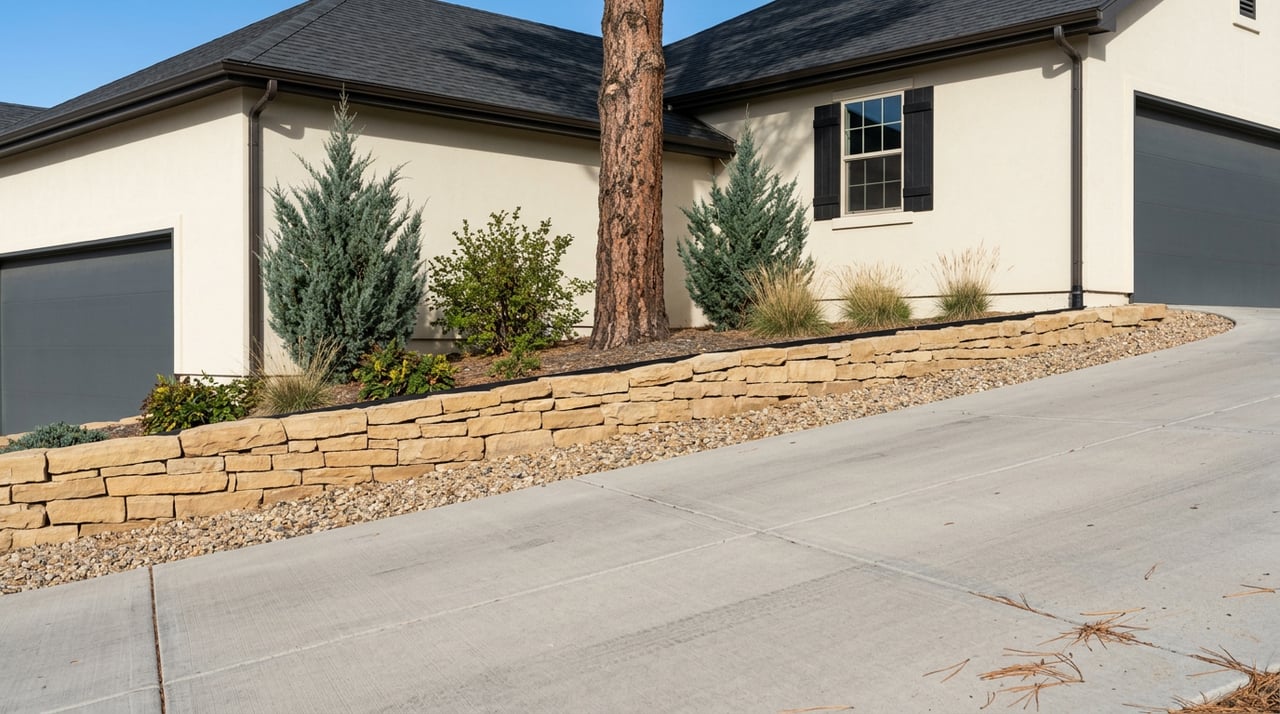
Many Broadmoor Bluffs homes rely on terracing, engineered fill, and retaining walls to shape usable outdoor spaces. These systems work well when designed, permitted, and maintained, but they do require ongoing attention. Confirm who maintains each wall and drainage feature: owner, HOA, or public entity. When in doubt, get the maintenance language in writing during negotiations.
Permitting is not one‑size‑fits‑all. Some hillside work requires plan review and permits. If you’re evaluating larger walls or grade changes, confirm standards and research the property’s permit history through City resources. The City’s page on fences and retaining walls is a good starting point for understanding local thresholds and rules. See the City’s fences and retaining wall guidance for context.
Wildfire readiness and evacuation
Wildfire is an active topic in the Broadmoor foothills. The Colorado Springs Fire Department runs public education, neighborhood chipping, and mitigation programs to support Wildland‑Urban Interface communities. Expect periodic defensible‑space work and opportunities to participate in local chipping events. Learn more from the Colorado Springs Fire Department’s wildfire outreach.
Evacuation planning is part of living smart in the foothills. Regional agencies have invited Broadmoor Bluffs residents to evacuation drills, underscoring both preparedness and proactive engagement. When you evaluate a home, confirm its assigned evacuation zone, likely routes, and any single‑egress constraints. Review the regional exercise background at the Pikes Peak Regional OEM page for the Broadmoor Bluffs Evacuation Exercise.
Grants and cost offsets
State programs can help with home‑hardening and fuel‑reduction costs. The Colorado Department of Local Affairs offers mitigation support that may offset work like ember‑resistant upgrades or defensible space. Explore the Wind and Wildfire Home Protection program for current options and eligibility.
One of the most common wildfire‑resilience upgrades is a Class A, non‑combustible roof system. Costs vary by home size and materials, but the range is often several thousand to tens of thousands of dollars. For background on roof vulnerability and why these upgrades matter, see this overview from Headwaters Economics.
Insurance availability and cost
Premiums across Colorado have risen due to wildfire, hail, and wind losses, with some carriers tightening guidelines in foothill pockets. Reporting in late 2024 highlighted significant statewide increases and selective pullback in certain areas. Read more context in CPR’s coverage of rising homeowners insurance in Colorado.
Before you fall in love with a view home, get address‑specific quotes from more than one insurer. Ask about credits for mitigation work and whether an inspection is required to apply discounts. The state’s FAIR Plan exists as a last‑resort backstop for owners who cannot find private coverage, but it offers limited, actual cash value features. Learn how the program works at the Colorado Division of Insurance’s page on the FAIR Plan.
HOA structure and expectations
Broadmoor Bluffs includes multiple HOAs and filings. Some focus on architectural control and drainage easements, while others add services like trash or landscape maintenance. Fees and rules vary, so request CC&Rs, bylaws, current budgets, reserve studies, and the last 12–24 months of meeting minutes. Ask explicitly about wildfire mitigation expectations, drainage responsibilities, and any planned or pending special assessments.
Local HOAs and the City have coordinated on traffic calming, paving, and water‑system improvements in the area. That’s positive for infrastructure, though it can mean temporary construction or potential assessments depending on the HOA. For a feel of neighborhood‑level improvements, review the Broadmoor Hills HOA’s notes on roads, safety, and utility work.
How these factors affect value and ownership costs
- View premium. Unobstructed views, larger lots, and Broadmoor adjacency typically support above‑average pricing and faster interest for well‑sited homes. Expect to verify comps within Broadmoor Bluffs itself rather than relying on broad city medians.
- Slope and site maintenance. Plan for periodic drainage tune‑ups, debris removal behind walls, and occasional repairs to hardscape or terraces. Large engineered fixes, if ever needed, can be significant. Budgeting early protects long‑term value.
- Wildfire mitigation. Annual or seasonal vegetation work, gutter cleaning, and ember‑resistant maintenance reduce risk and may support insurance eligibility. Roof upgrades to Class A assemblies are a common step and can be a larger capital item over time, as noted by Headwaters Economics.
- Insurance and insurability. Quotes vary by address, roof type, defensible space, and carrier appetite. In challenging cases, the FAIR Plan may be a fallback, but it is not a substitute for robust private coverage.
- HOA fees and assessments. Dues vary by filing. Confirm whether road, curb, sidewalk, or water‑main projects have triggered or could trigger special assessments by reviewing budgets and minutes, plus City notices like those summarized by the Broadmoor Hills HOA.
Your buyer due‑diligence roadmap
Before removing contingencies
- Seller disclosures and repair history for foundations, retaining walls, and slope stabilization, including permits and engineering.
- Any existing geotechnical or soils report; require a geotechnical review if the lot is steep or mapped in susceptible terrain via the CGS El Paso County landslide inventory.
- Full HOA package: CC&Rs, bylaws, current budget, reserve study, and 12–24 months of minutes. Ask about drainage and retaining‑wall responsibility, wildfire mitigation expectations, and any planned assessments.
- City and county permit history for grading, retaining walls, and structural work. Use the City’s retaining wall standards page as a reference point for what typically needs review.
- At least two address‑specific insurance quotes, plus clarification on any mitigation required to bind or reduce premiums. Keep the state FAIR Plan in mind only as a last resort.
Inspections to schedule
- Full home inspection plus targeted structural and roof inspections focused on settlement, wall movement, moisture intrusion, and prior slope repairs.
- Geotechnical site assessment scaled to risk: desktop review at minimum, with subsurface borings for steep or mapped‑susceptible lots.
- Civil or drainage review to confirm positive grading, downspout routing, swale function, and hardscape drainage.
- Wildfire mitigation review of defensible space and ember points like vents and gutters, informed by CSFD’s programs.
Questions to ask while touring
- Has any slope or retaining‑wall remediation been completed, and is there engineering and permit documentation you can review?
- Who maintains each retaining wall, terrace, and drainage feature shown on the lot plan, and is there a recorded easement?
- Where is the nearest hydrant to the home, and how does that factor into both emergency response and underwriting?
- Are any HOA or City capital projects planned that could lead to temporary construction or special assessments? Ask for three years of HOA minutes.
- Which carriers are currently writing in this area, and what premium trends has the seller experienced in recent years?
- Are there known evacuation constraints for this block during large events, and what are the alternate routes? Review the regional evacuation exercise summary.
Touring day quick checklist
- Ask for geotechnical and permit history covering retaining walls, caissons, and slope repairs.
- Look for visible grading issues, erosion paths, recent fill, or patched foundation work.
- Check if the lot appears within a mapped landslide or susceptible area using the CGS inventory.
- Verify roof material and age. Confirm Class A rating and look for ember‑resistant vents and cleanable gutters. See roof vulnerability context.
- Confirm nearest hydrant, likely evacuation routes, and any single‑egress limitations by consulting regional guidance.
- Gather HOA documents and ask directly about drainage, retaining‑wall responsibility, and pending capital projects. Review examples like neighborhood improvements.
- Obtain insurer pre‑quotes for the specific address and ask about mitigation credits. Keep the FAIR Plan as a last resort only.
The bottom line
Owning a Broadmoor Bluffs view home is about securing the lifestyle you want while protecting your investment with clear-eyed due diligence. Focus on the fundamentals: verify slopes and permits, plan for fire‑smart upgrades, price insurance before you commit, and read the HOA file closely. With a measured plan, you can enjoy the views and preserve long‑term value.
If you’re weighing a specific property, reach out for tailored guidance, local comps, and a vendor team that knows these hills well. Book a private consultation with Eric Scott to move forward with confidence.
FAQs
What makes Broadmoor Bluffs view homes different?
- Many homes sit on sloped lots with decks and walk‑outs to capture mountain and city‑light views, which can command a pricing premium and require attentive drainage and wildfire planning.
How do I check for landslide risk in Broadmoor Bluffs?
- Start with the Colorado Geological Survey’s El Paso County landslide inventory and follow up with a geotechnical engineer if the lot is steep or mapped as susceptible.
What wildfire steps help near Cheyenne Mountain?
- Create defensible space, maintain a Class A roof and ember‑resistant vents, use CSFD chipping and home‑visit programs, and confirm evacuation routes using resources like the regional exercise summary.
Are retaining walls usually the HOA’s responsibility in Broadmoor Bluffs?
- It varies by filing; confirm CC&Rs, plats, and easements to see whether the owner or HOA maintains specific walls and drainage features, then document it in your contract.
What is Colorado’s FAIR Plan and when is it used?
- The FAIR Plan is a limited, last‑resort insurance option for owners who cannot secure private coverage; review details at the Division of Insurance’s FAIR Plan page and prioritize private market quotes first.